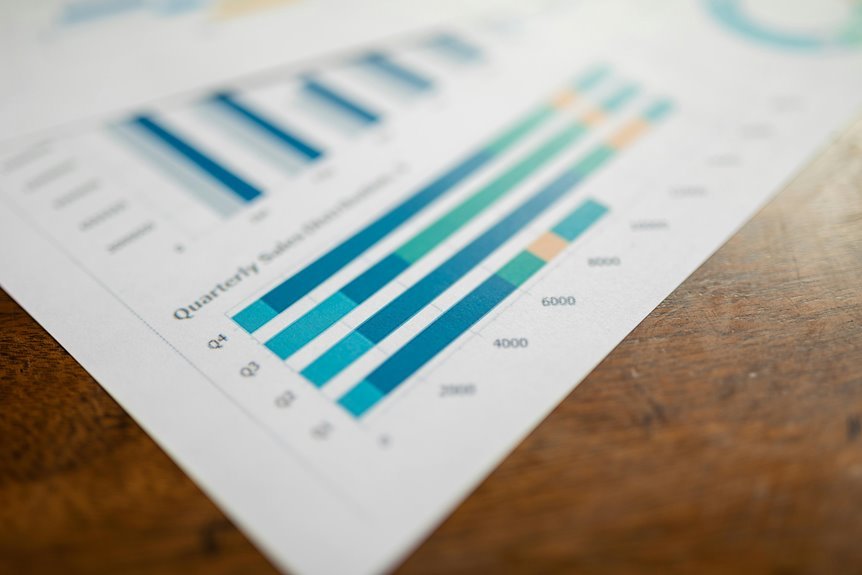
Strategic Performance Tracking: 997991802, 7482878945, 18002799032, 677850523, 3334439830, 917676371
Strategic performance tracking is a critical component for businesses aiming to improve their operational efficiency. By focusing on key metrics, organizations can align their actions with overarching strategic goals. Various tools and methodologies enhance this process, providing real-time insights into performance. However, the effectiveness of these strategies can vary significantly across different industries. Understanding the nuances of performance tracking may reveal essential lessons for companies seeking to optimize their operations and achieve sustainable growth.
Importance of Performance Tracking in Business
Although many businesses may overlook the significance of performance tracking, its role in driving strategic decision-making cannot be underestimated.
Effective performance analysis enables organizations to identify strengths and weaknesses, facilitating informed choices. The tracking benefits extend beyond mere metrics, offering insights that can lead to improved efficiency and innovation.
Businesses that prioritize performance tracking ultimately position themselves for sustained growth and competitive advantage.
Key Metrics for Strategic Decision-Making
When organizations seek to enhance their strategic decision-making, identifying and utilizing key metrics becomes imperative.
Key performance indicators (KPIs) such as customer satisfaction, market share, and revenue growth facilitate data-driven decisions.
Tools and Methodologies for Effective Tracking
Effective tracking of strategic performance necessitates the integration of robust tools and methodologies that streamline data collection and analysis.
Key components include data visualization techniques and performance dashboards, which facilitate real-time insights and enhance decision-making.
Case Studies: Success Stories in Performance Optimization
Organizations that have successfully integrated performance tracking tools often showcase significant improvements in operational efficiency and strategic alignment.
Through case study analysis, these organizations establish robust performance benchmarks that guide decision-making processes.
For instance, a retail company reduced overhead costs by 15% by leveraging real-time data insights, illustrating how effective performance optimization can lead to enhanced productivity and resource allocation.
Conclusion
In conclusion, strategic performance tracking serves as the compass guiding organizations through the turbulent waters of today’s competitive landscape. By leveraging key metrics and advanced tools, businesses can navigate challenges and seize opportunities for growth. Just as the ancient mariners relied on the stars for direction, modern enterprises must embrace performance insights to chart their course toward sustained success and innovation. Ultimately, a commitment to continuous improvement ensures resilience in an ever-evolving marketplace.